Beyond the Ball Hitch
5 Surprising Truths of Modern Towing Nobody Tells You
Post #24 in the Series: Ultimate Towing Guide
Introduction
Towing a trailer seems simple: back up, drop the coupler, connect the chains, and go. But this simplicity is deceptive. Behind this everyday routine lies decades of engineering, applied physics, and critical safety standards that, if ignored, can lead to serious—even fatal—accidents.
In this guide, we reveal five little-known truths about modern towing: from how a hitch can fail instantly, to why safety chains must be crossed, through the patchwork of state laws, and the tech that makes your trailer “disappear.” Plus, we present the best fifth-wheel hitches available on Amazon, with technical analysis and practical recommendations to help you choose with confidence.
What Nobody Tells You: The Hidden Engineering of Towing
Your towing system isn’t just “welded metal.” It’s a set of components engineered to rigorous standards (like SAE J684) to handle extreme forces, ensure stability, and act as a last line of defense in case of failure.
- Over-engineered design: Components are tested up to 3x the trailer’s gross weight.
- Catastrophic, not gradual failure: If the coupler detaches, there’s no warning—it’s instant separation.
- Trailer sway physics: Improper tongue weight can trigger dangerous oscillations.
- Integrated technology: Cameras, sensors, and regenerative braking are redefining towing.
Industry Standards and Safety Regulations
- SAE J684: Defines the “hitch” as vehicle-mounted and the “coupling” as trailer-mounted, with strict vertical and tensile testing requirements.
- Tongue weight: 10–15% for conventional hitches; 15–25% for fifth-wheel or gooseneck.
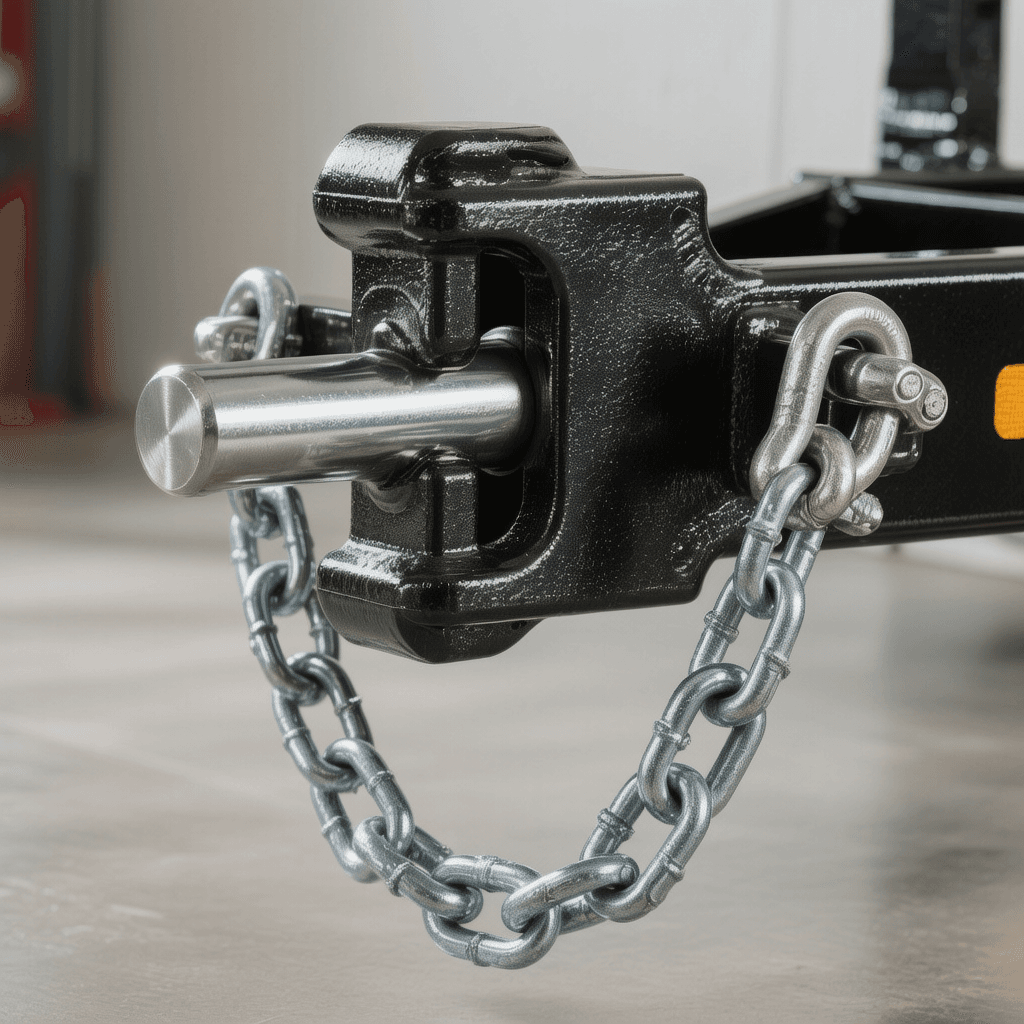
- Safety chains: Must be crossed under the trailer tongue and rated for at least the trailer’s GVWR.
Best Fifth-Wheel Hitches in 2025
We’ve selected the top-rated fifth-wheel hitches on Amazon based on durability, towing capacity, and ease of installation. All exceed SAE standards and are compatible with standard trucks using OEM prep packages or custom rails.
1. CURT A16 5th Wheel Trailer Hitch – Top Pick
- Price: Approx. $1,100
- Compatibility: Ideal for trucks with standard rails; 16,000 lbs GTW.
- Features: Fixed design, quick install, dual-jaw pivot for stability.
- Warranty: CURT limited lifetime warranty.
- View on Amazon
2. B&W Companion OEM Fifth Wheel Hitch – Premium
- Price: Approx. $1,200
- Compatibility: Designed for OEM systems in Ford, GM, and Ram; 20,000 lbs GTW.
- Features: Durable powder coat, greaseable jaws, no extra rails needed.
- Warranty: Lifetime warranty.
- View on Amazon
3. Andersen Ultimate 5th Wheel Hitch – Best Value
- Price: Approx. $1,600
- Compatibility: No bed rails required; perfect for trucks with limited space. 24,000 lbs GTW.
- Features: Lightweight (only 45 lbs), compact design, grease-free operation.
- Warranty: 5 years.
- View on Amazon
Buying Guide: How to Choose Your Fifth-Wheel Hitch
1. Weight Capacity (GTW vs. Payload)
Don’t just match your trailer weight. Compare the hitch’s GTW rating with your truck’s available payload capacity. Many exceed their truck’s limits unknowingly.
2. Installation Type
- Standard rails: Widely compatible but take up bed space.
- OEM system: Cleaner and stronger, but requires specific truck prep packages.
- No-rail (Andersen): Great for occasional use and maximum versatility, but limited in tight turns.
3. Maintenance & Convenience
- Greaseable: More durable under heavy use, but require regular cleaning.
- Grease-free: Cleaner and easier for occasional towers.
Common Towing Problems & Solutions
Frequent Towing Issues
| Problem | Cause | Solution |
|---|---|---|
| Trailer sway | Insufficient tongue weight (<10%) | Shift cargo forward; add a sway control bar if needed |
| Hard to uncouple hitch | Excessive vertical pressure or lack of lubrication | Level truck and trailer; grease jaws before use |
| Metallic noise when turning | Worn pivots or dry components | Inspect wear points; apply lithium grease |
Step-by-Step Response to Trailer Sway
- Keep steering wheel straight → 2. Release accelerator → 3. Apply trailer brakes manually → 4. Stop gently → 5. Recheck load distribution
Brand Comparison: CURT vs. B&W vs. Andersen
| Brand | Pros | Cons |
|---|---|---|
| CURT | Affordable, widely compatible, rugged | Heavier, requires rails, needs greasing |
| B&W Companion | Premium build, OEM integration, long lifespan | Higher price, only for trucks with OEM prep |
| Andersen Ultimate | Lightweight, no rails, easy to install/remove | Limited in tight turns, not ideal for daily heavy use |
Basic Fifth-Wheel Hitch Installation
- Verify compatibility: Confirm your truck has rails or an OEM prep package.
- Mount base rails: Secure brackets to rails using Grade 5+ bolts.
- Install hitch head: Lock pivot mechanism into place and secure with safety pin.
- Adjust height: Level the hitch so the trailer sits horizontally when connected.
Maintenance Tips for Your Hitch
- Monthly lubrication: Apply grease to pivots and jaws before long trips.
- Visual inspection: Check for cracks, rust, or excessive wear on welds.
- Post-trip cleaning: Remove mud, salt, or sand with water and a soft brush.
Cost Breakdown: How Much to Invest?
| Item | Estimated Cost |
|---|---|
| Fifth-wheel hitch | $799 – $1,800 |
| Rail kit (if no OEM) | $200 – $400 |
| Trailer brake controller | $100 – $300 |
Tip: Watch for deals on Amazon during Prime Day or Black Friday. Many hitches include free shipping and no-cost returns.
Legal and Safety Regulations
- Trailer brake laws vary by state: from 1,000 lbs (North Carolina) to 4,500 lbs (Texas).
- Safety chains must be crossed and rated for at least the trailer’s GVWR (per SAE J684).
- Total weight (truck + trailer) must not exceed your vehicle’s GCWR (Gross Combined Weight Rating).
Future Trends in Towing
- Electric trucks & towing: Regenerative braking systems adapted for long downhill grades.
- Smart cameras: Transparent trailer view, lane-change assist, and jackknife angle warnings.
Frequently Asked Questions (FAQ)
1. Can I use a fifth-wheel hitch on any truck?
No. You need bed rails, an OEM prep package, or a no-rail system like Andersen. Always verify compatibility with your specific model.
2. Why shouldn’t I brake if my trailer starts to sway?
Braking compresses the rear suspension and pushes the trailer forward, worsening sway. Instead, release the accelerator and use only the trailer brakes.
3. Do safety chains need to be crossed?
Yes. Crossing them creates a “cradle” that catches the trailer tongue if it detaches, preventing it from dragging on the road.
4. Can I tow a 4,000-lb trailer without brakes?
It depends on the state. It’s legal in Texas and Arizona but illegal in California, Florida, and North Carolina. Always check local laws before traveling.
Conclusion: Tow with Knowledge, Not Just Power
Modern towing isn’t just about horsepower—it’s about precision, respect for physics, and smart use of technology. Understanding these five truths—and applying them—turns a stressful experience into a safe, confident routine.
Explore our guides on How to Load a Trailer and Towing Laws by State for more. Also, check out our Trailer Brakes Guide.
Before your next trip, inspect your hitch, balance your load, and secure those chains. Your safety—and others’—depends on these small details.
Ready to tow with confidence? Click the links above and choose the hitch that fits your needs.
About Ultimate Towing Guide: We’re a team of automotive engineers, safety instructors, and towing enthusiasts with over 15 years of hands-on experience. Our mission: make towing accessible, safe, and stress-free.
Related Articles in This Series: - How to Calculate Tongue Weight - Trailer Brake Controller Installation Guide - Cameras That Make Your Trailer “Disappear”
This post contains affiliate links. If you make a purchase through them, we may earn a commission at no extra cost to you. This supports our mission to create free, reliable content.